
Caregiving and Care Partners
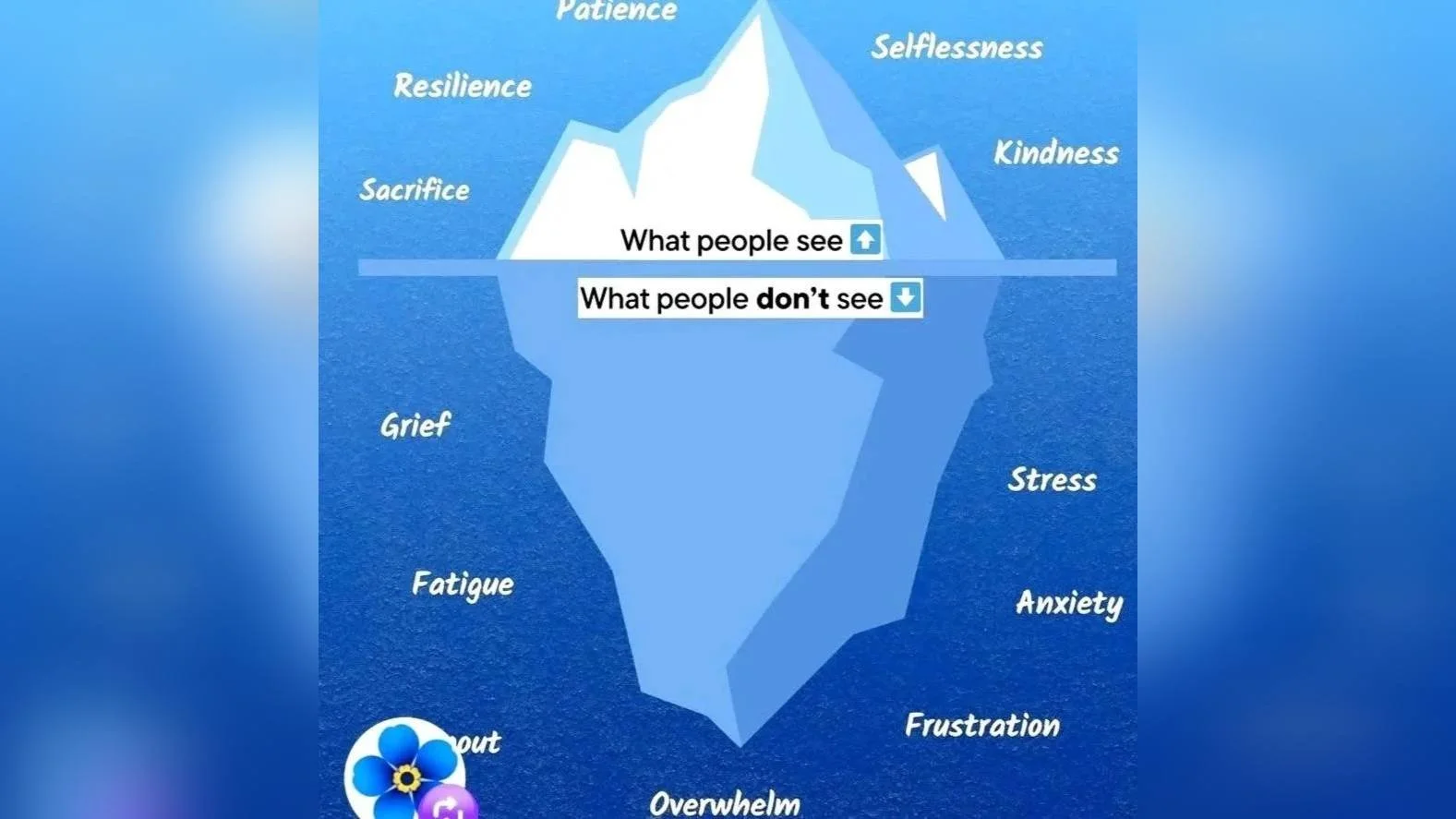
A caregiver iceberg - what you see and what you don’t see below the surface
When you're called upon to be a caregiver, it often happens in an instant—a crisis moment marked by a sudden change in a loved one's health. You might be in the middle of work, shuttling children between sports practices, preparing for a social function, or running errands. Then comes the phone call that changes the trajectory of your life! In that moment, you have no manual, no skills, no medical terminology, and no time to prepare. You are left on your own, responsible for this person and all the decisions that need to be made in their best interest.
Here's the reality: as you become a juggler, you start to lose yourself. You feel depressed but put on a brave face—stoic and determined to never let them see you cry. If you end up in the hospital, people send their love and best wishes for a quick recovery. However, as a caregiver or care partner, no one truly sees what you’re going through, and only another caregiver can truly understand your struggles.
You’re racing against the clock, and time is not your friend. You’re stressed, you can’t breathe, you find yourself privately weeping, and you can’t eat. In fact, most days, you feel like you’re drowning.
How can we better support each other? Instead of asking, “What would you like me to do?” try saying, “Tell me what I can take off your plate this week to lighten your load, my friend. I know this is incredibly challenging, and you’re handling it with such grace!” Empathy is not sympathy (it’s giving you space to feel and be seen).
Aging is wonderful and challenging – Let’s continue to show up for each other!